logo

World Up Exclusive Interview: Quadron of Denmark

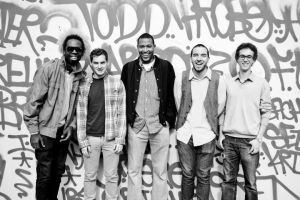
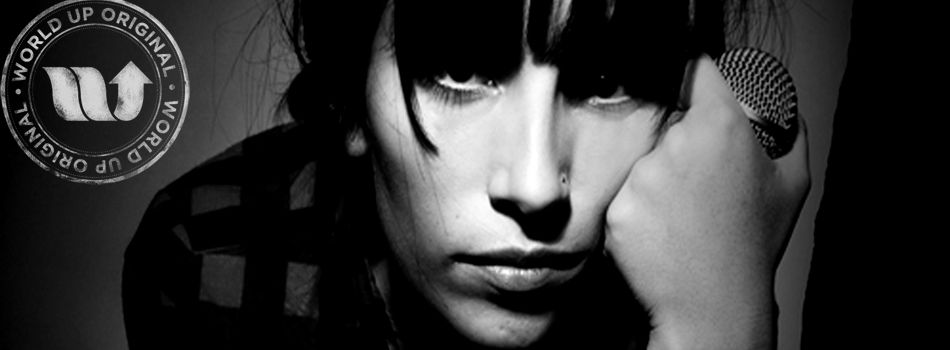
Photo Credit : blog.fairtilizer.com

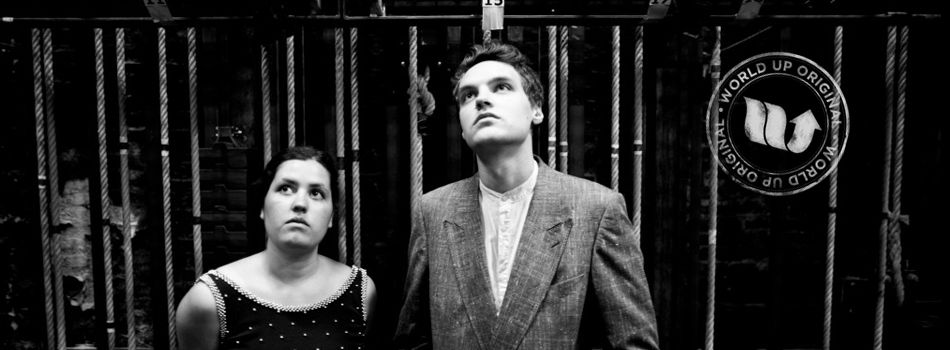
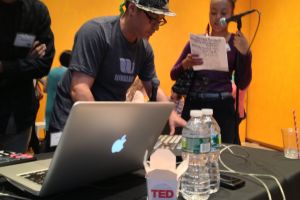
The evocative sound of this Danish pair, Coco Owusu and Robin Hannibal, comes by way of Coco’s youthful exuberance, dynamic stage presence, and sultry vocals, collab-ing with Robin, who often doesn’t perform with Quadron, darting back and forth from the sound board to perfect their full-bodied melodies. The duo brings intelligent, focused, and playful aural consciousness to listeners, leaving a goosebumpy and emotional crowd in their wake. WU saw this firsthand as Quadron performed tracks from their self-titled debut album at Southpaw this June, and we got the chance to speak with the Danish duo about the meaning of “Quadron,” their love of body painting, and plans to reinvent the electronic soul scene on their first American tour.

Coco: This is Coco and Robin, and we’re chillin with World Up.

WU: How did Quadron come about, and how is your sound is distinct from the Boom Clap Bachelors?

Robin: We kind of grew out of Boom Clap Bachelors or it came about while working on songs for BCP. The distinction between those in English [versus] BCP in Danish, is it’s probably more directly soul influenced. Whereas BCP is a mix of different things, [from] different people. Me and Coco found a common ground, which was soul, and we like to explore that.

WU: How did you come to call yourselves Quadron?

Co: There is a certain point in a music relationship where you have to figure out a name, when you realize that you are a real group. I don’t even remember the other ideas. I know we talked about calling ourselves Robin and Coco or Coco and Robin and we talked about calling us, my biological grandfather was African and his name was Orino, and we would call us Orino and Hannibal but that would be [hard to understand], I think. So we had to find something we had in common. And the word Quadron means being a quarter black and Robin’s grandfather is African American and my grandfather was African so that makes us Quadrons and we think it’s a beautiful word also written and we are proud of our heritage.

WU: Can you talk about some of the tribal imagery used in your album?

Co: I would love to talk about that. Nobody asks us about that.

Ro: How long do you have?

Co: Denmark is still interested to know about people’s backgrounds. If people have dark hair or have curls or look anything besides blond and Danish, then people always ask where they’re from. I’ve always been very interested in Africa, maybe because my biological grandfather was African and I never met him, but also just because I think Africa is hot, and I think the Masai painting is very, very cool, and jewelry as well. It fit well to the name Quadron to have something taken from African, because I think what they did was to try to make more Indian tribal. For me it’s still African. I think it’s hot.

Ro: We all came from Africa.

WU: There are so many tracks on your album that are extremely evocative “Day” being one of them. Can you talk about what this song means to you?

Co: It means different things each time, I think. It’s nice, the song didn’t have any specific personal emotions, like pointed on a person for instance, or a specific day, it’s more like an ode to the day-to-day. You can put different meanings in it every time you listen to it. People who listen to the song would all think different things, because we didn’t spell [out] what the song is about. It’s very simple, the lyrics. So all the emotions can be what the listener would feel. Or they can try and figure out what we feel. For me it changes from performing it or listening to it. Sometimes I try to remember what I thought of when I recorded it, but it’s still fresh.

WU: It doesn’t seem like Copenhagen has much of a soul scene, how has Quadron been received?

Ro: Really well I think, taking into consideration that there really isn’t a scene for the music. There are people who like it and there’s foreign artists dropping by playing at some of the bigger venues. There is an audience but it’s nothing like other genres like rock, pop, or electronic music. It’s like a minority in Denmark, in that regard people really accepted it and have taken it into their hearts. We’ve been really well-received, [our music has been] played a lot and we’ve been blessed with the opportunity to play at really nice venues and get good press. Especially because it’s our debut album, its always easier the second time around.

WU: Coco, you’ve mentioned that your major influences are Jill Scott, Erykah Badu, and Lauryn Hill, these influences are apparent in your sultry vocals. How do you anticipate being received by American audiences?

Co: I was really scared. There is a mess of talent in the US of soul singers, female vocalists. It’s always been unreal for me growing up wanting to be a major superstar and coming from such a little country. I always thought about which approach should I do to make it. Should I meet a very dope producer in the US? Should I get married to an American? How can I make it? At one point, when you stop caring about it, you start to get into just wanting to make good music and that is the key. That’s why some people make it and some people don’t. It’s all about the songs that they write or perform. That’s why Lauryn Hill made it instead of another girl in a church. Maybe the vocal talent is equal but it’s all about song-writing. It kind of calmed me down when I got frustrated about so many good talents out there, that we’re different, we’re from Denmark. I didn’t grow up with the whole church soul background so when you stop trying to be like them, it’s nice.

WU: What is your creative process?

Ro: It’s very different and it’s changing all the time. There’s always a period of getting to know each other, working out how you get the best result. It’s like every other thing, trial and error. You try this approach and see how it works and try this approach and see how it works. When I look at all the songs most have a different approach or started in a different way. Now we’ve collected all these experiences, now we know how to get to that result, or what we like doing and how we like doing it. For this time around, we both really feel it’s an emotional record. You should always challenge yourself and try to make it even more personal and emotional and now we’ve found a way to do everything together or get close to doing everything together and that way it’s even more a collaborative, emotional effort. We’re actually starting in the same place and going to the end result together.

Co: We go straight to the emotions now because all of the practical stuff, we kind of know how each other…we don’t have to keep bumping into the same walls of disagreements and a way to do things.

Ro: It’s a trust thing, I think, also. At some point you trust the other person, you’ve seen the end result and you know how that process was. You come to a point where you just trust the other person. I know she’ll get there or I know this idea will work because she pulled it off last time, she can do it. I shouldn’t be worried about it and hopefully it’s the same the other way around and then you feel like he’s got it or she’s got it. And that helps a lot too.

WU: Your music has been compared to groups like Little Dragon and Lykke Li, how do you feel about these comparisons?

Co: We like them. I was definitely a fan of Little Dragon before we were compared to them. Robin introduced me to them. The song ‘Fortune’ is one of his favorite songs. I bought the record after we were compared to them I wanted to check it out. I think they’re great. They’re really great. I’m proud of all of them being from Scandinavia. Lykke Li is just…after I saw “New Moon” three times on the airplane I want to buy her album too. When you’re from Scandinavia, it’s like, “but they’re from Sweden we want to see what’s going on in The States.” And now we keep getting compared to them, so it’s like “oh, yeah.”

Ro: I think it’s nice also because there are some similarities. There is the accent thing, the part of where we’re coming from Scandinavia, maybe more open approach to other genres and fusing them, very the same but also very different. Also sometimes I’ve heard it right after each other, it is very different the approach and the way it’s put together. Everything stands on its own but it also Scandinavian.

Co: I would love to meet them, all of them are ahead of us and it would be nice to share experiences.

WU: So as I mentioned before World Up is an organization that believes that music can be used as a tool to bring social awareness and change, particularly in young people. As an artist do you feel that it is your responsibility to create music that’s socially aware or conscious?

Ro: Definitely. Without a doubt. I don’t think that it’s always something you think of in the process, and I think there needs to be creative freedom and freedom of speech and I don’t think it always [has] to be politically correct, but I think you should be aware of what you’re doing.

By Stephanie Riederman and Valerie Ellois

  • Share/Bookmark

Jul 22nd, 2010

On Rotation: BlackMahal – The “Punjabi-Hip-Hop-Jazz-Funk Experience”

Cultivating their talents in the mist of San Francisco Bay, BlackMahal brings together myriad
cultural influences to produce a truly unique sound. With traditional Indian classics blended
into funk beats, this group takes hip hop to a whole new level.

Percussionist and vocalist Lal Singh Bhatti is known in his homeland as the “Godfather” of
the Dhol drum (a 15th century instrument from the Punjab region). Together with Vijay
Chattha (a well-known hip hop Dj from the Bay area), he is the foundation of BlackMahal.
With the addition of Balwinder Singh Bhatti, Jon Cook, Mandeep Sethi, J-Slim, Tim Chang and
Satish Pillai, BlackMahal has become the non-stop Punjabi-hip-hop machine that it is today.
For more information on the crew or to give them a listen, visit their website or Myspace.

  • Share/Bookmark

Jul 22nd, 2010

Watch this Now: Caramba by Nomadic Massive’s Own Lou Piensa

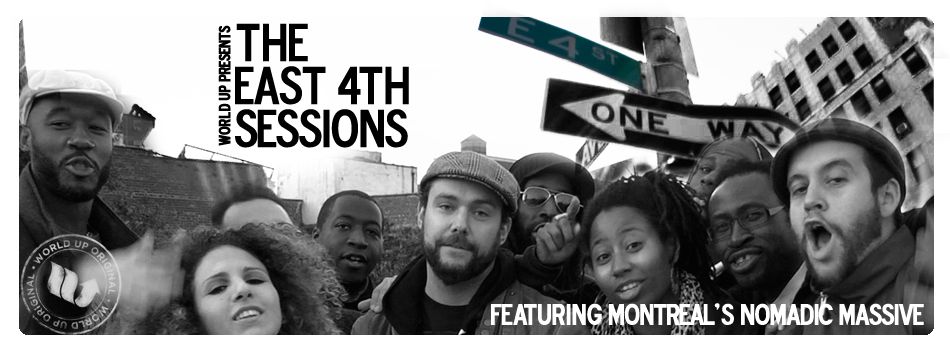
French, English, Portuguese and Spanish might sound like course offerings in your college’s language department, but they’re also mother tongues you can hear in the new track “Caramba” by Lou Piensa, one part of Montreal’s supergroup Nomadic Massive. This World Up favorite continues repping cross-cultural exchange through his music, as a solo act and in the global collective. Check the special guests Rael da Rima of Pentagono and Gaspar from Z’Africa Brasil.

Big up to Tr3ze Producoes!

  • Share/Bookmark

Jul 21st, 2010

Redefining Street Art – Blu

We’ve been watching BLU for a while but this is by far the most fantastical and lengthy piece of street art ever. Wonderful!

  • Share/Bookmark

Jul 14th, 2010

Four-Sided Sound: Quadron Tours the U.S.

what we are listening to:

Take Feist-like vocals and add a dash of soul, and you’ve got the Denmark-based R&B duo Quadron, who are busy touring the United States. With an indie-electronic sound full of brassy and bassy tones, their calming, jazz feel distinguishes them from run-of-the-mill contemporary R&B.

With Robin Hannibal manning the instruments and 21-year-old vocalist Coco O, the group has a diversity of sound that many established artists can only strive for. Robin dabbles in different types of instruments, and Coco’s voice is simply beyond her years. Like with the Yeah Yeah Yeahs or Santigold of years past, listeners will have trouble classifying this group—many of their songs end up in different genres from one-another. But you’ll come away knowing you’ve just tried something new, and you really like the taste.

This tour marks the first time the entire band has come to play in the United States, with shows in DC, New York, Pennsylvania, Georgia and Florida. If you didn’t have a chance to check them out on tour, we sat down with them when they rolled through Brooklyn…look for our exclusive interview coming later this week. Get better acquainted with Quadron’s experimental sound, check them out on Myspace or their fantastic label PLUG Research.

  • Share/Bookmark

Jul 6th, 2010

DUB INC (French for Fire)

Recently DUB INC. rolled through NYC and we were blown away by them.

DUB INC has been labeled a French Reggae Group, but explore their albums and other musical
influences become very apparent. With a fusion of North African music, Hip-Hop and nearly
every genre in between, DUB INC. has developed a unique sound that has the international
music community wanting more.

The group burst onto the music scene in 1997 in their home city of Saint-Étienne, France.
Dubbed the Village of Art and History, Saint-Étienne was a prime spot for eight skilled
musicians to marinate. They recorded their debut EP, “Dub Incorporation 1.1,” in 1999 but it
wasn’t until “Diversité,” their third EP which launched in 2003, that the crew was able to burst
onto the national music scene. Their latest album “Afrikya” was released in 2008 to more critical
acclaim.

With their new recordings as ammo, DUB INC played show after show garnishing legions of
fans in their home region, and then throughout Europe. With the release of “Dans le Décor”
in August 2005, their tour expanded to Germany, Portugal, Italy, Spain, Greece and Morocco.
At long last, DUB INC dropped down for a few dates in the New York City area.

…look for a killer review of the show coming soon.

  • Share/Bookmark

Jun 24th, 2010

VIDEO: Afrikan Boy – Lagos Town

afrikanboy

New video from UK based, Nigerian Afrikanboy aka YOUNG SUNNY ADE best known for his Collaboration with M.I.A on her album KALA and the hit Hussel…you think its tough now, come to africa” – and his cameo appearance in her “Paper Planes” video.

  • Share/Bookmark

Mar 22nd, 2010

ANGELA’S MIXTAPE – Eisa Davis and her Hip Hop Theatre

eisa-davis-high-resWe will be reposting this for sure but it just came to our attention..actually the Eisa Davis is a good friend of our friend Angelica Kushi and she let us in on her new piece, Angela’s Mixtape, which she will be performing in a few months in conjunction with the Hip Hop Theater Festival in NYC. .

here is a brief description:
When the revolutions of the 70s devolve into the materialism of the 80s, a girl born into an activist family has some unanswered questions. In this musical memoir, the author, niece of the legendary Angela Y. Davis, reveals her struggle to shine in the shadow of an icon. A quest for personal politics told through the powerful voices of five women and a hip hop beat.
(more…)

  • Share/Bookmark

Feb 18th, 2009

New Video from Colombia’s Choc Quib Town

the new album "oro" ...video after the jump

the new album "oro" ...video after the jump

We love Choc Quib Town. They are one of the best examples of this global Hip-Hop movement. Their sound is highly addictive, incorporating Hip-Hop and traditional colombian Cumbia and the afro-colombian genre of Currulao which is a Pacific coast sound rooted in a marimba style instrument similar to a xilophone  or the african balafon. (more…)

  • Share/Bookmark

Feb 16th, 2009

The Pedagogy of Hip Hop

Old School

Old School

As the regular readers know, a large part of what World Up tries to focus our attention to is the academic side of this globalization of Hip Hop culture and how people from around the world are taking this music and “lifestyle” they grew up with and remixing it within their own cultural context. We’ve written a lot on M.I.A. in the past, mostly because she is one of the only artists who has embraced all of this and crossed over into the mainstream and amazingly not just hip hop but she has very much crossed over into pop and dance scenes as well. And while, like anyone else, she has her detractors, we feel she is a wonderful example of all the things we find fascinating and important about this globalization.
That being said, we were delighted to find this in our inbox today. The 2nd part of a a fascinating article from a recent blog discovery, The Pedagogy of Hip Hop, please take a minute and check it out here.
It delves deeper into MIA, her song Paper Planes, and the new 3rd World Order she represents.

In addition, we would like to big up The Pedagogy of Hip Hop Blog. Its a perfect example of what World Up is about and the line of thinking in which we like to explore (yes, we also just love good music and writing about that) using Hip Hop as a jump-off to look at/contextualize globalization. Hip Hop is a broad theme we see tying together things like social entrepreneurship, education and social media, graffiti and street art movements, extreme soccer and breakdancing, Angolan Kuduro music and Mongolian Hip Hop…..but at the root of it Hip Hop is about pushing urban culture forward, breaking barriers and status quo, creating something out of nothing and most importantly the rhythm of a modern heartbeat.

  • Share/Bookmark

Feb 11th, 2009
Staff
Staff

About Us Founded in 2004, World Up is a non-profit organization (501c3 pending) dedicated to educating the public about international cultures, and issues that affect the global community through modern Global Urban Music Through our ongoing events, educational programming, and our annual music festival, we are actively promoting and fostering diversity, cross-cultural understanding, and social change through Hip-Hop culture. World Up is run by a group of volunteers who come from diverse backgrounds and cultures but share a deep love for Hip-Hop and how it is used as a tool for social and political change. We have a well established network of artists, DJ´s, MC´s, Film makers, promoters, activists, and the like around the globe.